
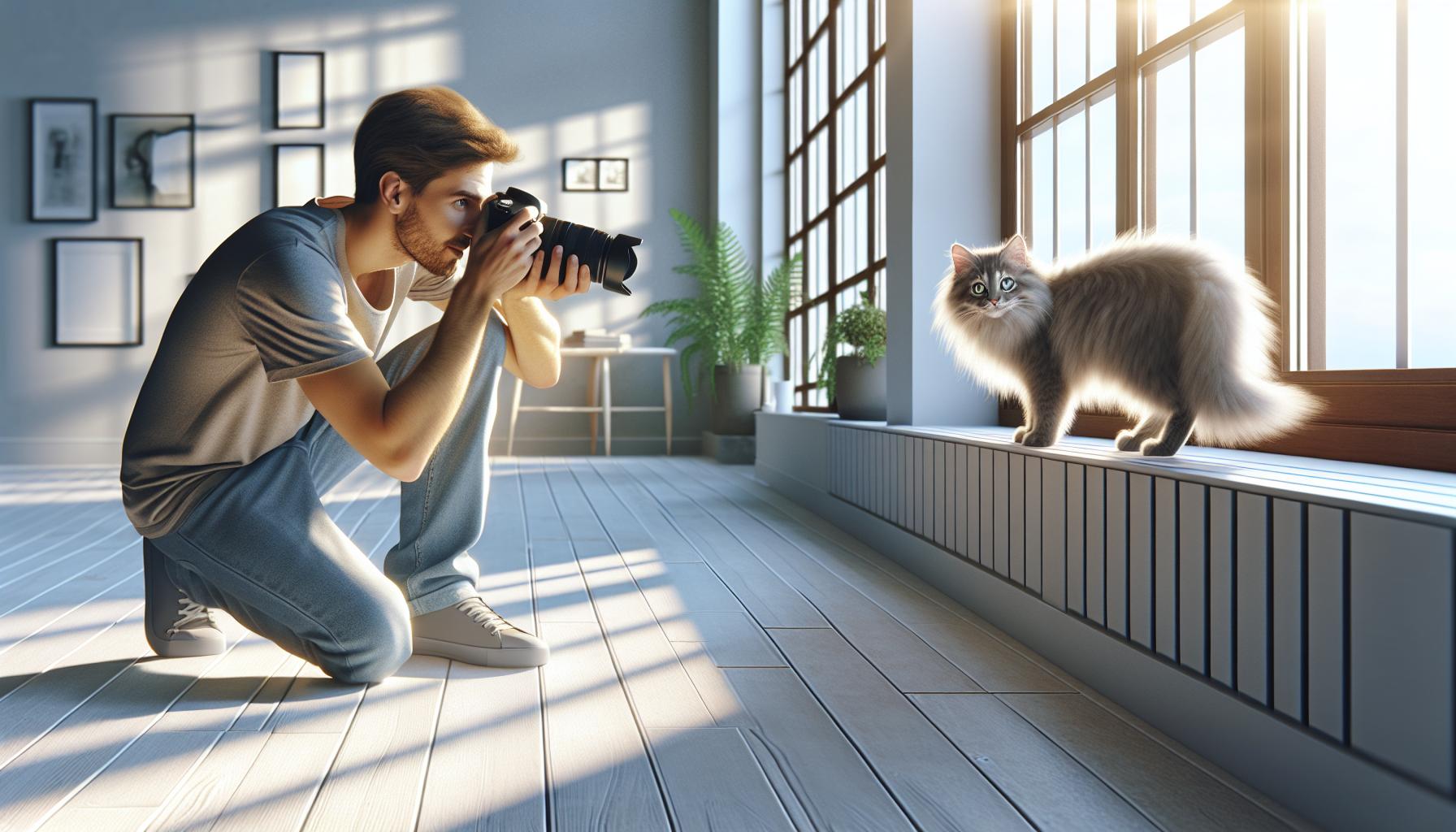
Capturing the perfect photograph of a cat requires more than just pointing your camera and hoping for the best. As a professional photographer, I’ve learned that successful cat photography combines technical skill with an understanding of feline behavior and personality.
The key to creating vibrant, engaging cat photos lies in mastering both camera techniques and animal interaction. Professional photographers know that focusing on a cat’s eyes – those mesmerizing windows to their soul – can transform an ordinary picture into something extraordinary. Modern cameras with animal eye autofocus make this easier, but it’s the photographer’s patience and timing that truly make the difference.
How to do cat photography
Cat photography requires specific equipment and technical knowledge to capture stunning feline portraits. Here’s what you need to know about the essential tools and settings.
Essential Camera Equipment
A fast lens with an f/1.8 aperture creates beautiful background blur while maintaining sharp focus on the cat. Here’s the essential gear:
- DSLR or mirrorless camera with high ISO capabilities
- 50mm prime lens for portraits
- Zoom lens (70-200mm) for distant shots
- High-speed memory cards
- Spare batteries for extended sessions
- Natural light reflector for indoor shoots
Best Camera Settings for Cat Photos
These camera settings maximize image quality when photographing cats:
| Setting | Recommended Value | Purpose |
|---|---|---|
| Shutter Speed | 1/160 or faster | Prevents motion blur |
| ISO | 800-1600 | Enables shooting in low light |
| Aperture | f/1.8 to f/4 | Creates background separation |
| Focus Mode | Continuous AF | Tracks moving subjects |
| Drive Mode | Burst/Continuous | Captures quick movements |
Key technical considerations:
- Switch off the flash to avoid startling cats
- Enable animal eye AF for precise focus
- Use aperture priority mode for consistent exposure
- Set continuous autofocus for active cats
- Select burst mode to capture fleeting expressions
- Avoid digital zoom on smartphones
The combination of appropriate equipment and proper settings creates the foundation for compelling cat photography. I maintain these settings as my baseline configuration then adjust based on lighting conditions.
Creating the Perfect Environment
Creating an ideal setting for cat photography starts with selecting appropriate lighting conditions and locations that make cats feel comfortable during photo sessions.
Choosing the Right Location
A successful cat photo session requires a calm environment where felines feel secure and relaxed. Select a quiet area away from household distractions or unfamiliar noises. Create a comfortable space with:
- Elevated platforms near windows for natural poses
- Clean backgrounds without clutter or distracting elements
- Familiar spots where cats regularly rest or play
- Soft surfaces like beds or cushions for comfortable positioning
Working with Natural Light
Natural sunlight provides optimal lighting conditions for cat photography. Position your setup strategically to maximize available light:
- Place subjects near large windows during daylight hours
- Shoot from the side or with your back to the light source
- Avoid positioning cats directly in front of light sources
- Use morning or late afternoon light for soft illumination
- Position reflective surfaces to fill shadows when needed
| Light Position | Effect on Photos |
|---|---|
| Side lighting | Creates depth and dimension |
| Back lighting | Produces rim lighting effects |
| Front lighting | Reveals facial details clearly |
| Overhead light | Minimizes eye shadows |
Mastering Cat Photography Techniques
Cat photography requires specific techniques to capture stunning portraits that highlight feline beauty and personality. Here’s how to enhance your photography skills with proven methods.
Getting the Right Focus
Modern cameras feature animal eye AF technology that identifies and focuses on a cat’s eyes. Set your camera’s focal point directly on the eyes rather than letting it default to the nose. Use macro lenses for detailed close-ups of facial features. In manual focus mode, maintain a distance of 3-4 feet from your subject to achieve optimal sharpness.
Capturing Different Angles
Position yourself at various heights to create diverse perspectives:
- Shoot at eye level for intimate portraits
- Capture from above while cats rest on furniture
- Get low to the ground for playful action shots
- Frame diagonal compositions to add dynamic energy
- Create symmetrical shots when cats face the camera directly
- Set exposure compensation to +1 or +2
- Choose colored backdrops like red or blue to create contrast
- Increase lighting with multiple sources
- Position cats near windows for natural illumination
- Use spot metering to expose dark fur properly
| Lighting Condition | ISO Setting | Aperture | Shutter Speed |
|---|---|---|---|
| Bright Natural | 400-800 | f/4-5.6 | 1/250 |
| Indoor Standard | 800-1600 | f/2.8-4 | 1/160 |
| Low Light | 1600-3200 | f/1.8-2.8 | 1/125 |
Engaging Your Feline Subject
Successful cat photography relies on creating genuine moments of interaction and maintaining your subject’s interest. This section explores effective methods to capture engaging feline portraits through strategic use of props and trust-building techniques.
Using Toys and Props
Interactive toys spark natural hunting behaviors that create dynamic photo opportunities. Dangling feathers or strings out of frame prompts cats to display alert postures with pricked ears, wide eyes and focused expressions. Position toys above the camera to direct the cat’s gaze while capturing upward angles that highlight facial features. Ribbons, laser pointers and crinkly balls encourage playful movements like jumping, pouncing and that characteristic pre-pounce wiggle.
Building Trust and Patience
Establishing comfort and connection with feline subjects produces more authentic portraits. Let cats investigate the camera equipment at their own pace before starting a session. Maintain a calm, quiet environment without sudden movements or loud sounds. Read the cat’s body language – relaxed whiskers, slow blinks and upright tail indicate a receptive mood for photos. Take breaks when signs of stress appear like flattened ears or tail swishing. Multiple short sessions often yield better results than one long photoshoot.
| Positive Signs | Negative Signs |
|---|---|
| Slow eye blinks | Flattened ears |
| Upright tail | Tail swishing |
| Forward whiskers | Dilated pupils |
| Relaxed posture | Crouched stance |
| Gentle purring | Growling/hissing |
Post-Processing Tips
Post-processing enhances captured cat photographs by adjusting exposure, colors, and sharpness. These editing techniques transform good photos into stunning portraits while maintaining natural feline features.
Enhancing Cat Photos
- Adjust white balance to showcase true fur colors
- Increase clarity in the eye area to highlight natural reflections
- Apply selective sharpening to fur textures without creating artificial noise
- Balance shadows and highlights to reveal fur details
- Remove distracting elements like dust spots or background objects
- Fine-tune contrast to emphasize facial features
- Create depth by adjusting vibrance in specific areas
- Crop images to improve composition while maintaining subject focus
- Over-saturating colors that make fur look unnatural
- Excessive noise reduction that smooths out fur texture
- Heavy vignetting that draws attention away from the cat
- Applying skin smoothing filters that eliminate natural fur patterns
- Overdoing HDR effects that create unrealistic lighting
- Clipping highlights in white fur areas
- Adding artificial eye sparkles that look manufactured
- Applying heavy color filters that alter natural fur tones
| Editing Parameter | Recommended Range | Purpose |
|---|---|---|
| Exposure | ±0.5 stops | Maintain natural lighting |
| Clarity | 10-25% | Enhance fur detail |
| Sharpening | 25-40% | Preserve texture |
| Noise Reduction | 10-20% | Retain fur definition |
| Contrast | 5-15% | Define features |
Conclusion
Taking breathtaking cat photos requires a blend of technical expertise and genuine connection with our feline subjects. I’ve found that investing time in understanding both camera settings and cat behavior makes all the difference in capturing those special moments.
Remember that every cat has its unique personality and comfort level. I encourage you to be patient and let your furry subject guide the session. With practice and the right approach you’ll develop your own style while creating stunning portraits that showcase each cat’s individual character.
The journey to mastering cat photography is ongoing but the results are truly rewarding. When you combine technical skills with a deep appreciation for these magnificent creatures you’ll create images that tell compelling stories and capture hearts.